
It’s been a hot, dry, and smoky summer here in Colorado until the last few days of August, with conditions across the Arkansas River Basin reflecting broader statewide trends. Here’s where things stand as we close out August and look ahead to fall and winter.
Temperature Trends
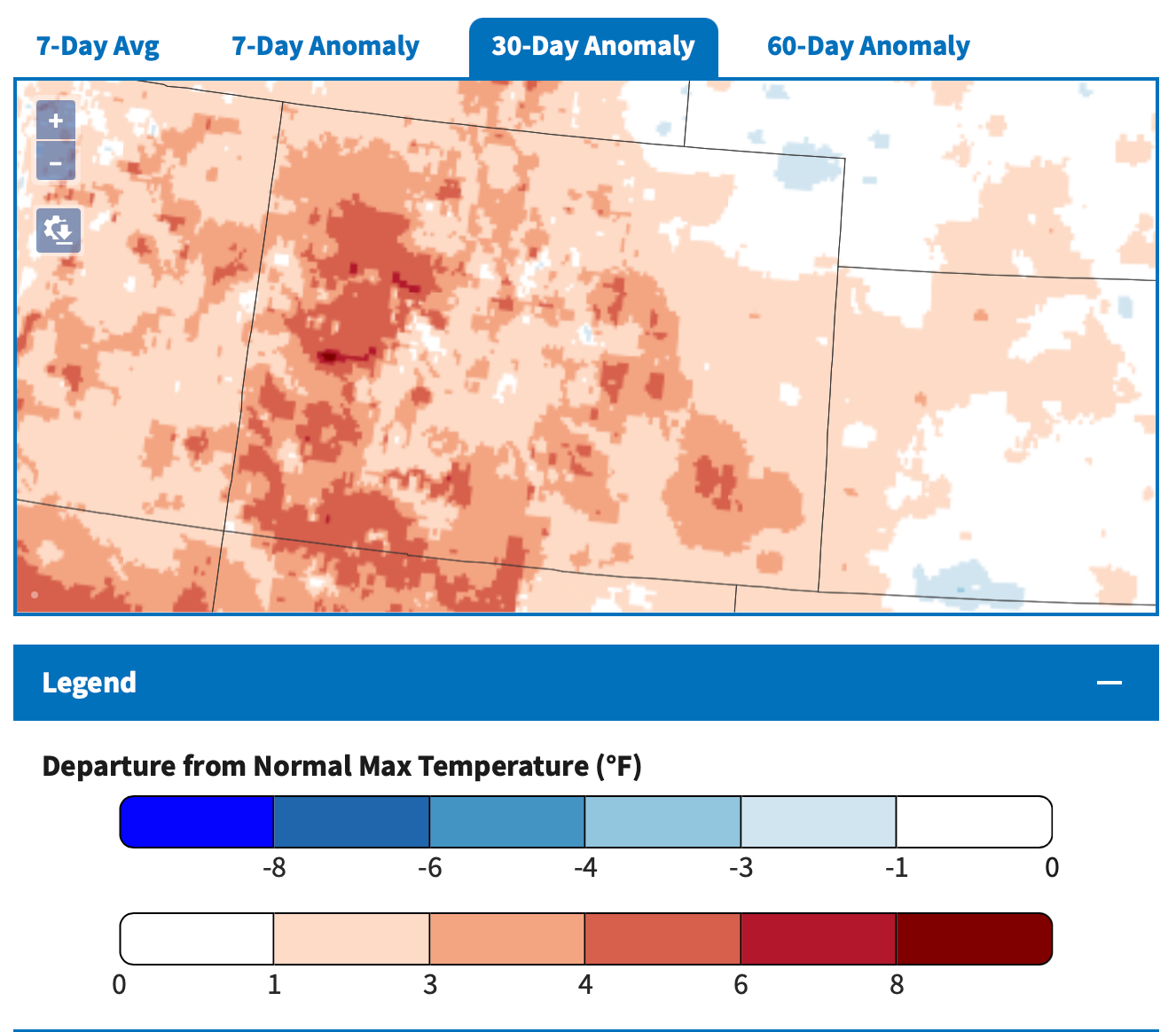
The 2025 water year (October–August) has ranked among the 10 warmest on record statewide, with July marking the sixth consecutive month of above-average temperatures. Conditions have been especially warm west of the Continental Divide, where reduced cloud cover and low humidity allowed daytime highs to consistently exceed seasonal averages.
In contrast, parts of eastern Colorado, including stretches of the lower Arkansas River Basin, have seen cooler overnight lows compared to normal. This cooling effect is tied to the same dry air and lack of cloud cover, which enhance radiational cooling at night.
Overall, the statewide average for October–August landed firmly above normal, with the Upper Arkansas Valley experiencing significant summer heat, despite some late-August monsoon relief (figure 1).
Drought & Precipitation
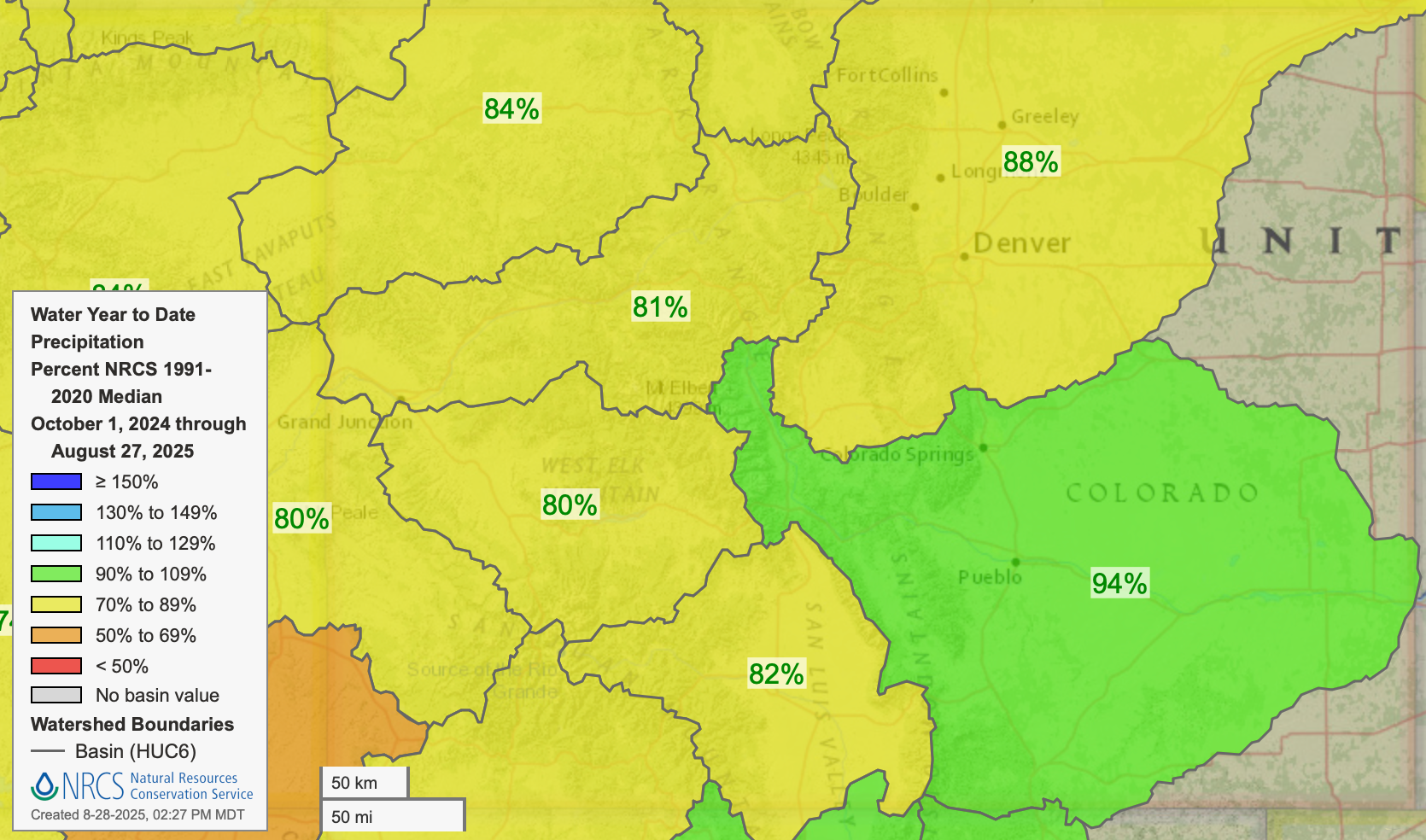
For many parts of the state, the month of August typically is has the maximum average precipitation of the Water Year (figure 2). While late August rains brought short-term relief to parts of central Colorado, much of the state remains in below-average precipitation (figure 3). Removing the large November 2024 snowstorm from totals paints an even drier picture.
As of late August:
- Water year precipitation: 81% of median (vs. 104% in 2024)
- 30-day precipitation: 41% of average (vs. 152% in 2024)
- 90-day precipitation: 65% of average (vs. 125% in 2024)
- Statewide drought coverage: 50% of Colorado in drought, with ~7% in exceptional drought
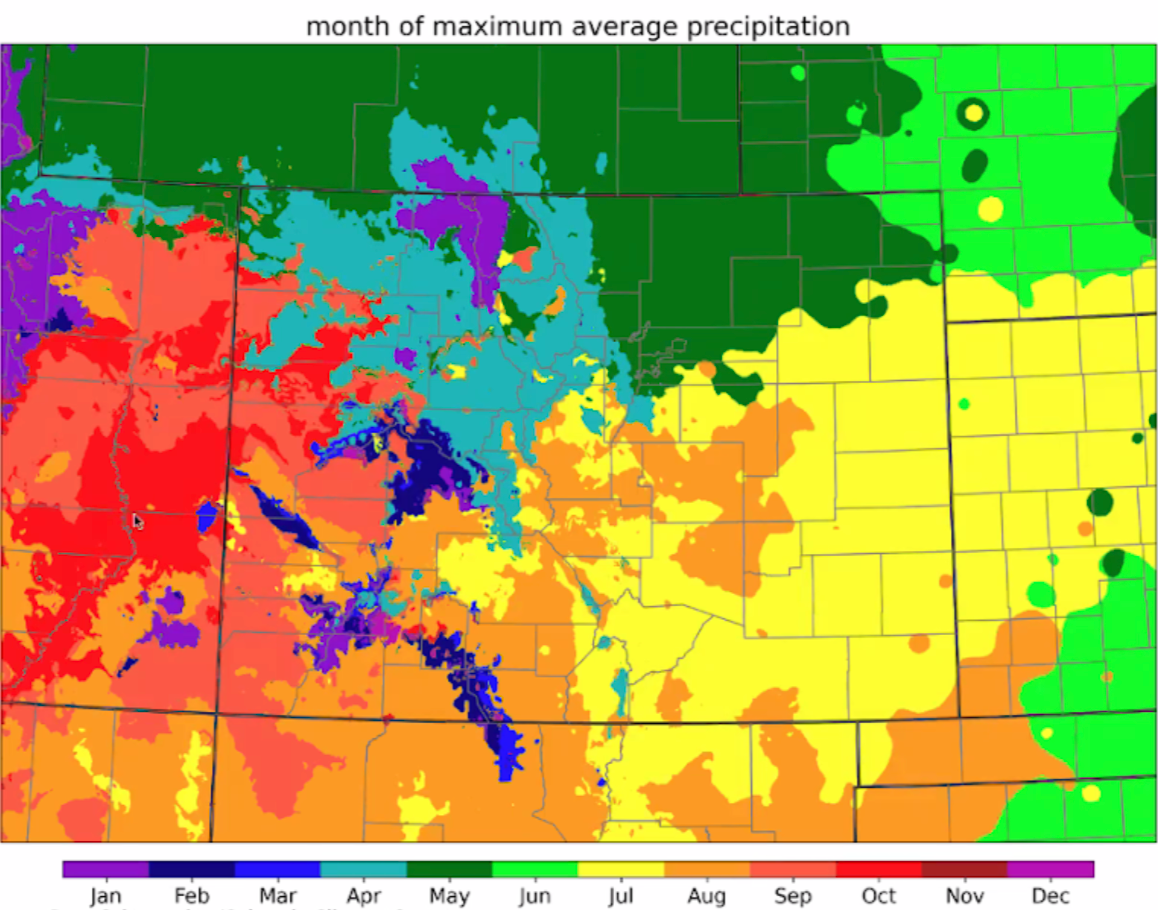
figure 2: Month of Maximum Average Precipitation Map
The divide between eastern and western Colorado remains stark (figure 4). West of the Divide, drought has intensified dramatically, shifting from drought-free conditions last fall to severe drought today. East of the Divide, frequent thunderstorms have slowed drought development, though the Arkansas River Valley has experienced marked increases in soil dryness, with some locations showing four-category degradations in the past 26 weeks on the U.S. Drought Monitor (figure 5; figure 6).
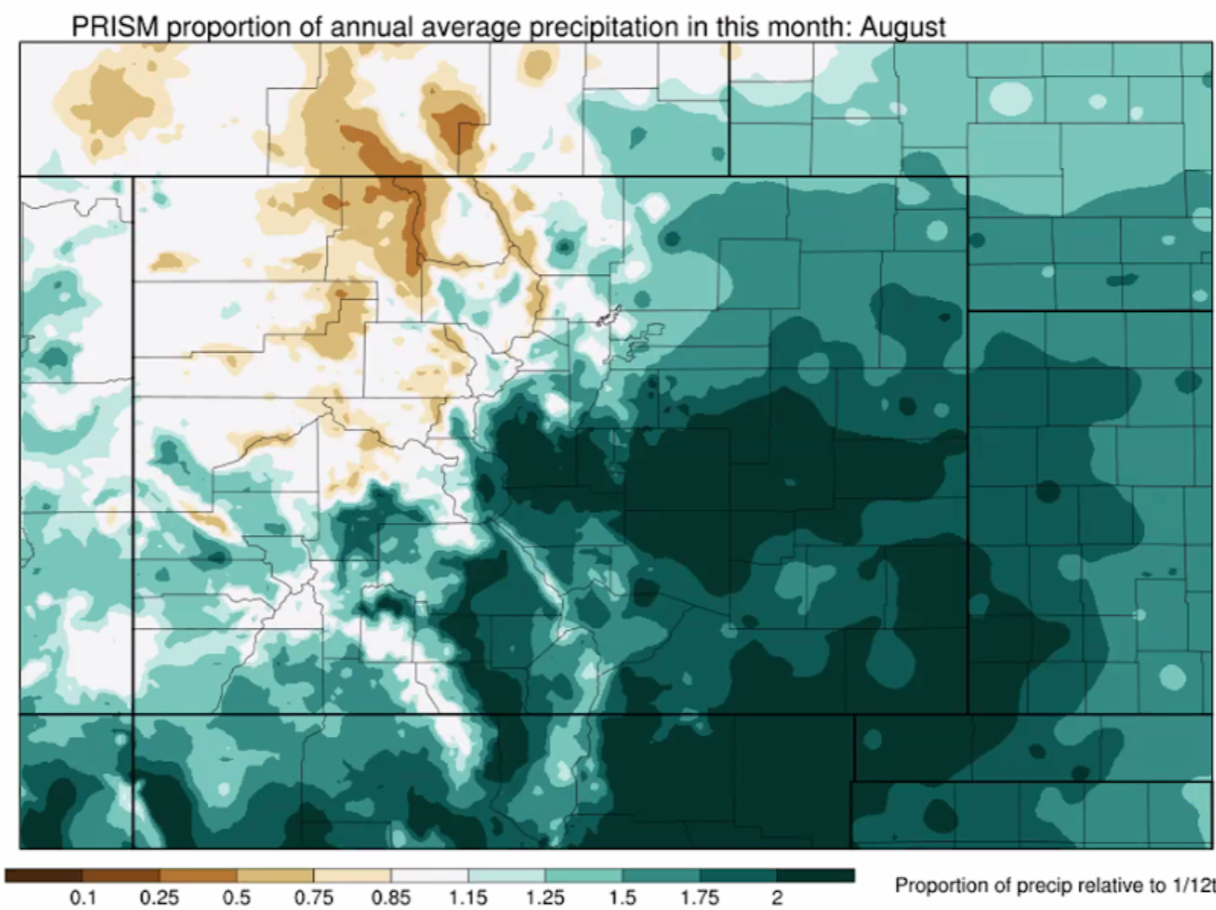
figure 4: PRISM proportion of annual average precipitation in this month
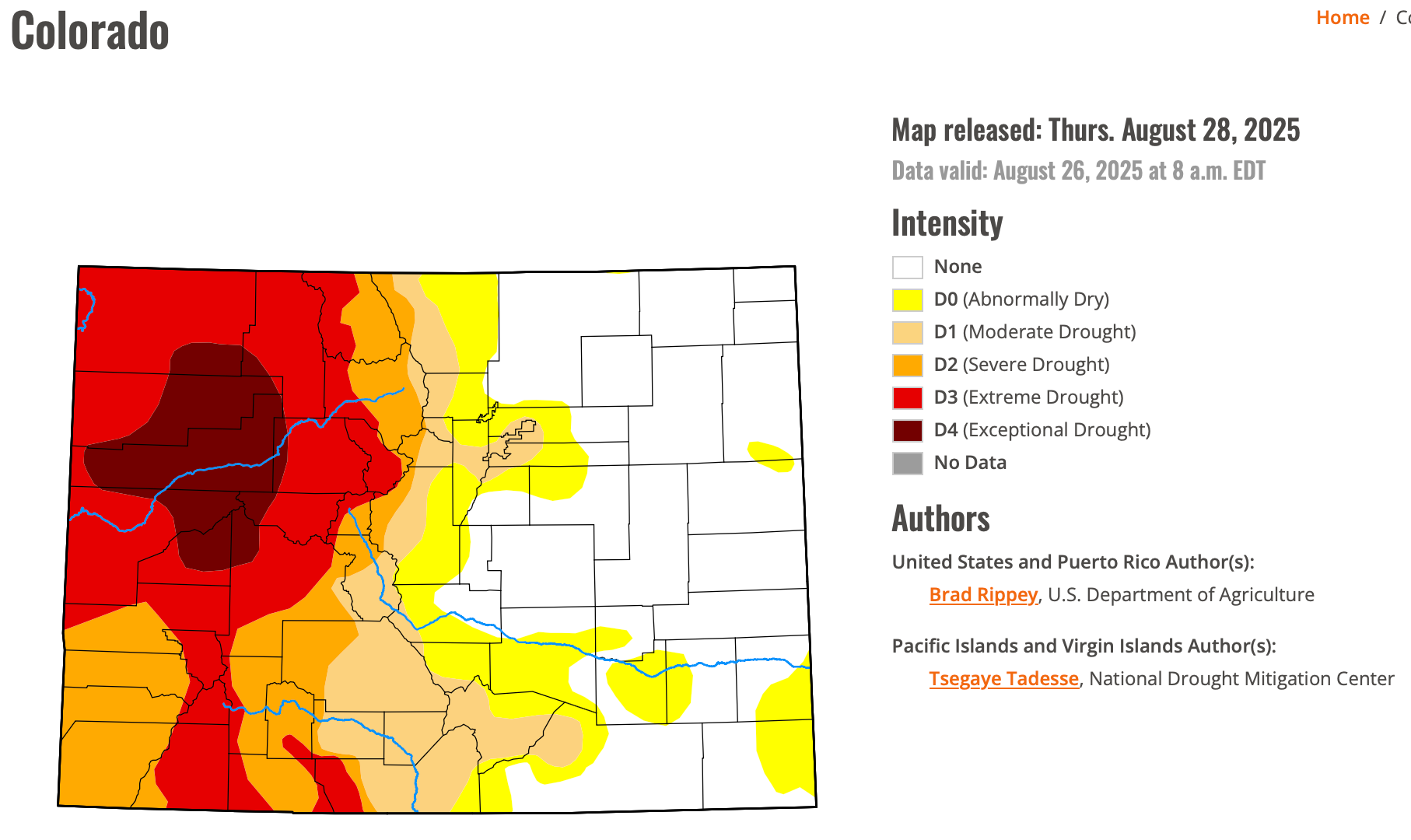
figure 5: Colorado Drought Monitor
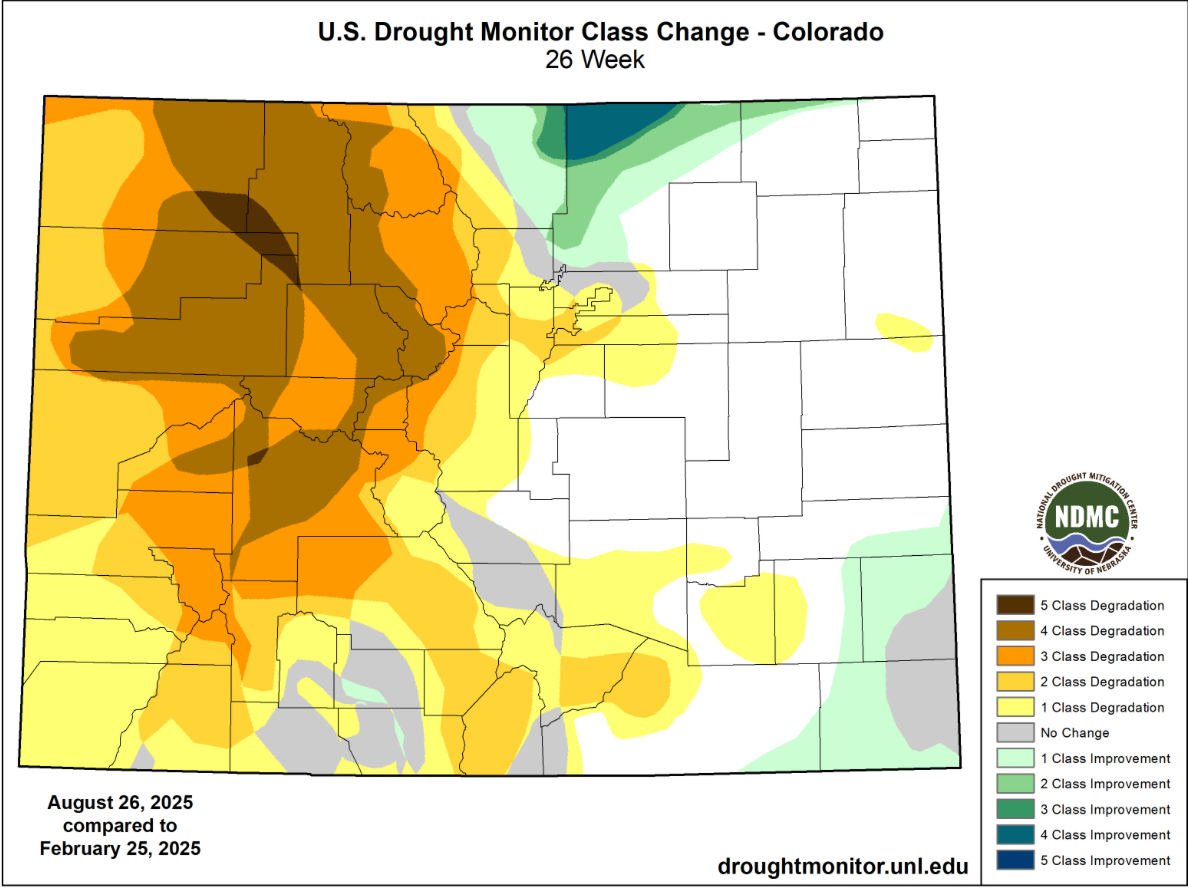
figure 6: Colorado 180-day Standard Precipitation Index
Monsoonal rains arrived late but did bring high totals to the San Juans, Independence Pass, Leadville, and Buena Vista, reducing short-term deficits. Still, August precipitation is critical for southern and western Colorado, and this year’s weak start was reminiscent of 2012, a memorably dry year for this state.
August Precipitation Totals
Leadville-2.37 in
Buena Vista-1.51 in
Salida-0.91 in
Cañon City-3.83 in
Pueblo -1.67 in
Rocky Ford-1.65 in
Lamar-2.27 in
Streamflow
Streamflow across the Arkansas Basin ran average to slightly below average in August (figure 7). In the Upper Basin, conditions were shaped for the first half of the month by the Voluntary Flow Management Program (VFMP), a cooperative effort among water users to maintain flows for boating and fisheries during the recreation season.
This summer, conditions were so dry that the standard 10,000 acre-feet of Fry-Ark Project water was not enough to sustain flows through August. Partners came together to contribute an additional 7,000 AF, lowered the Wellsville target to 600 cfs, and timed extra releases—including 6,800 AF from Pueblo Water—to keep flows stable.
As a result, rafting flows held near 600 cfs at Wellsville through August 15th, a success credited to strong collaboration among Arkansas Basin partners.
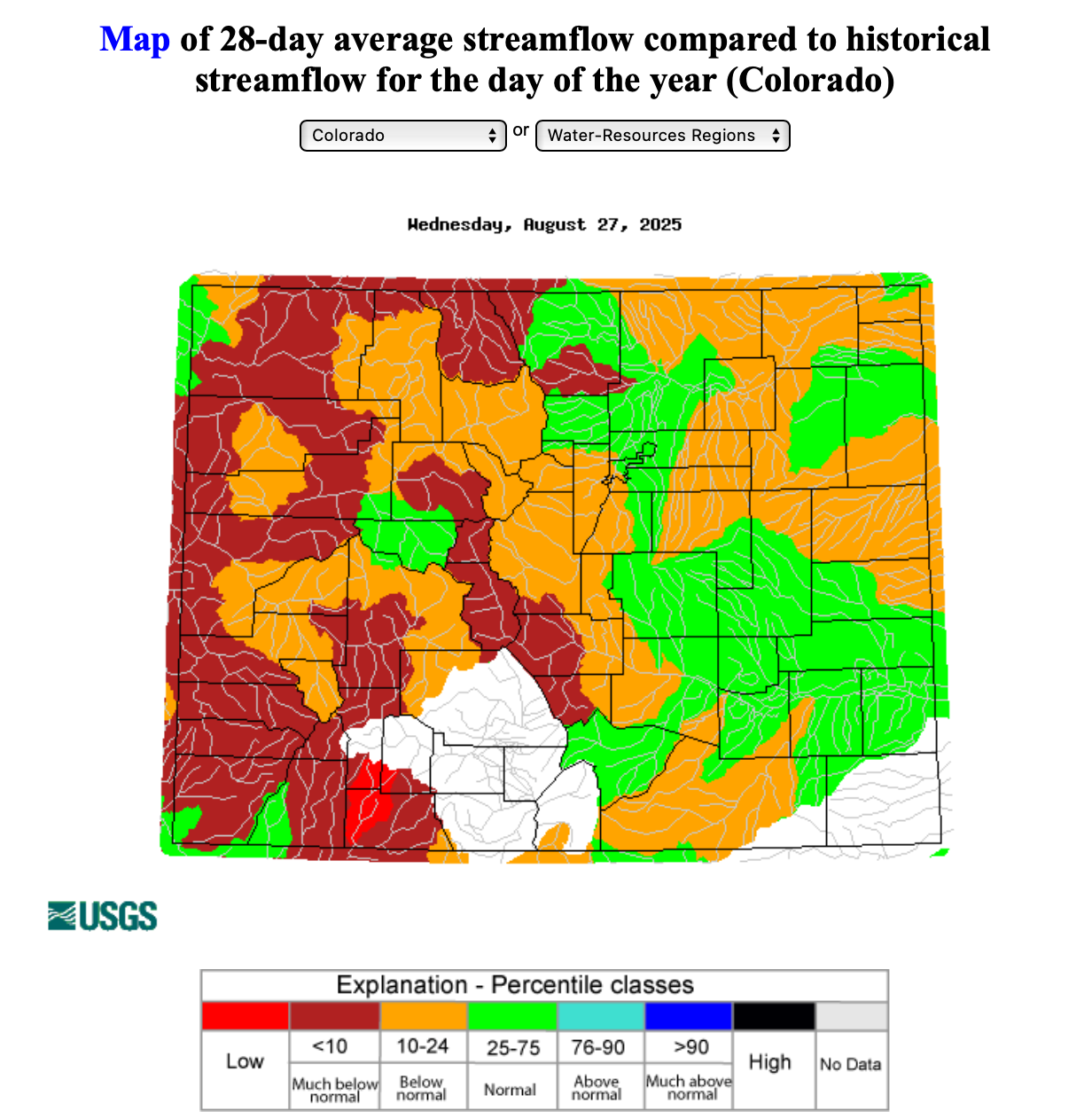
figure 7: Map of 28-day average streamflow compared to historical median
Streamflow Snapshot (9/2/2025; 8:15am)
* measured flow totals include native flows, BOR project water, releases, and exchanges
Granite, CO (8 miles south of Leadville)- 114 cfs
Salida, CO- 297 cfs
Wellsville, CO- 292 cfs
Portland, CO (10 miles south of Canon City)- 261 cfs
Above Pueblo Reservoir, CO- 431 cfs
Avondale, CO- 655 cfs
Lamar, CO- 15.2 cfs
For current streamflow updates, reference the Colors of Water webpage.
Reservoir Storage
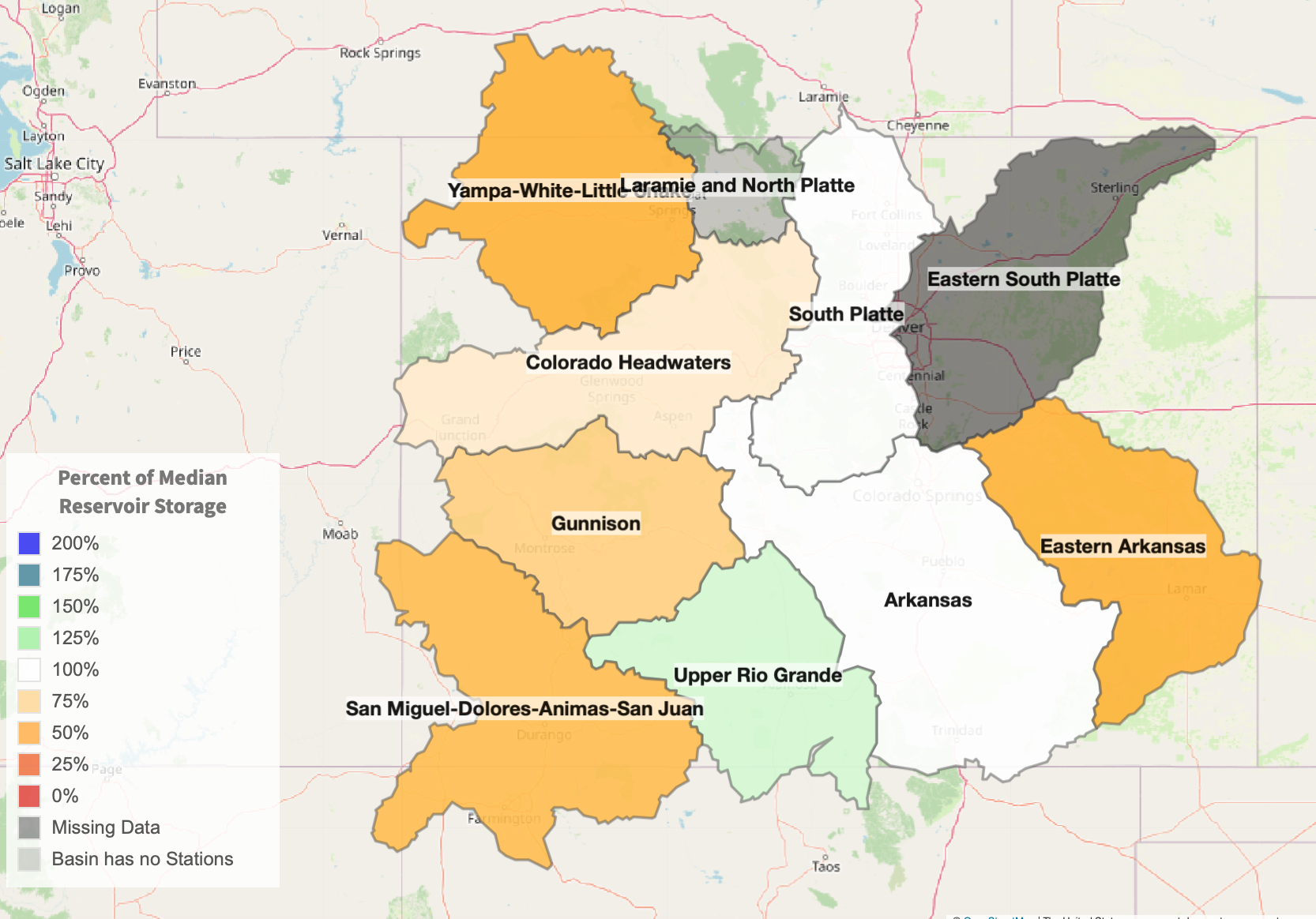
figure 8: Reservoir Storage Percent of Median
Summer/Fall Outlook
Looking ahead into September, models continue to show elevated chances for above-normal temperatures and below-normal precipitation across much of Colorado ( figures 9 and 10). For the Arkansas Basin, this means limited drought relief heading into fall.
A big piece of the puzzle each winter is the El Niño–Southern Oscillation (ENSO), which tracks sea surface temperatures in the central Pacific. A strong El Niño or La Niña usually gives forecasters more confidence in predicting seasonal patterns. For 2025–2026, though, the picture isn’t crystal clear. On the ENSO front, conditions are expected to remain ENSO-neutral through early fall (56% chance) before shifting toward a weak La Niña in late fall/early winter. Historically, La Niña falls are drier-than-normal in Colorado, raising concern that already dry conditions could worsen by late 2025 (figures 11).
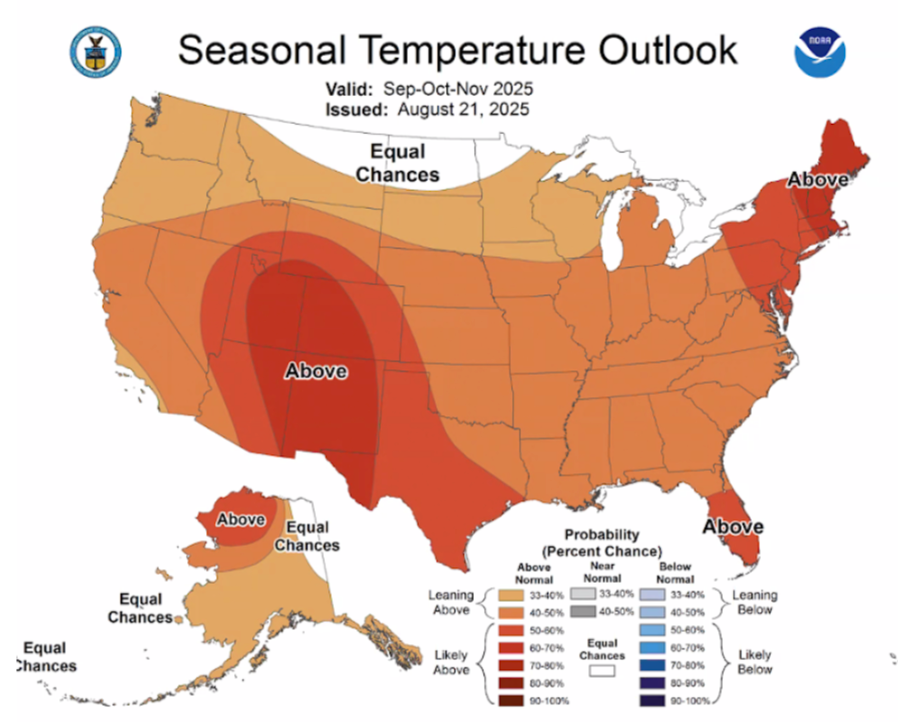
figure 9: Three Month Temperature Outlook
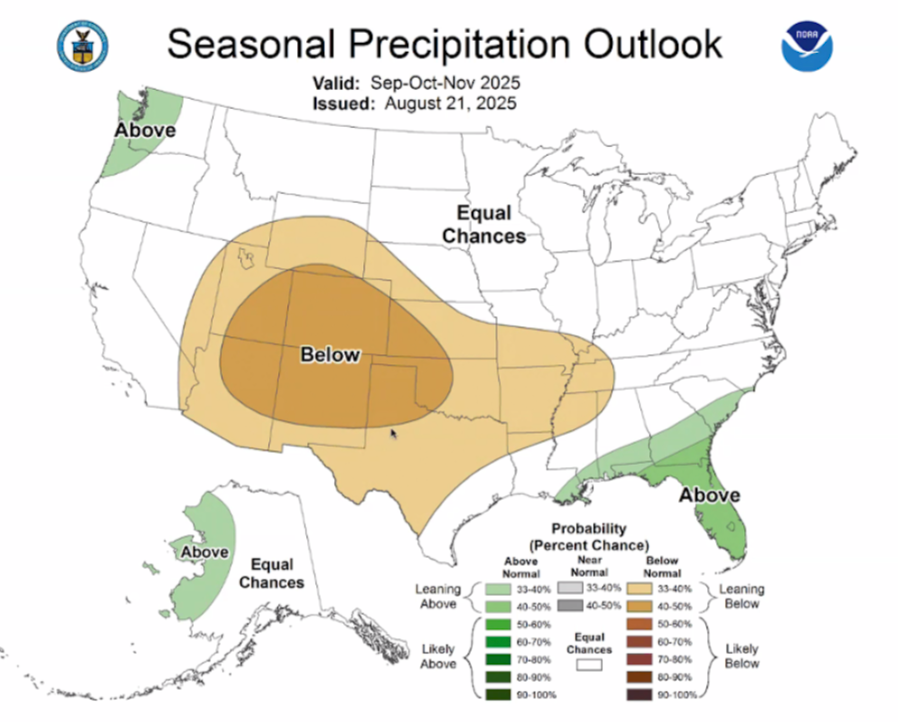
figure 10: Three Month Precipitation Outlook
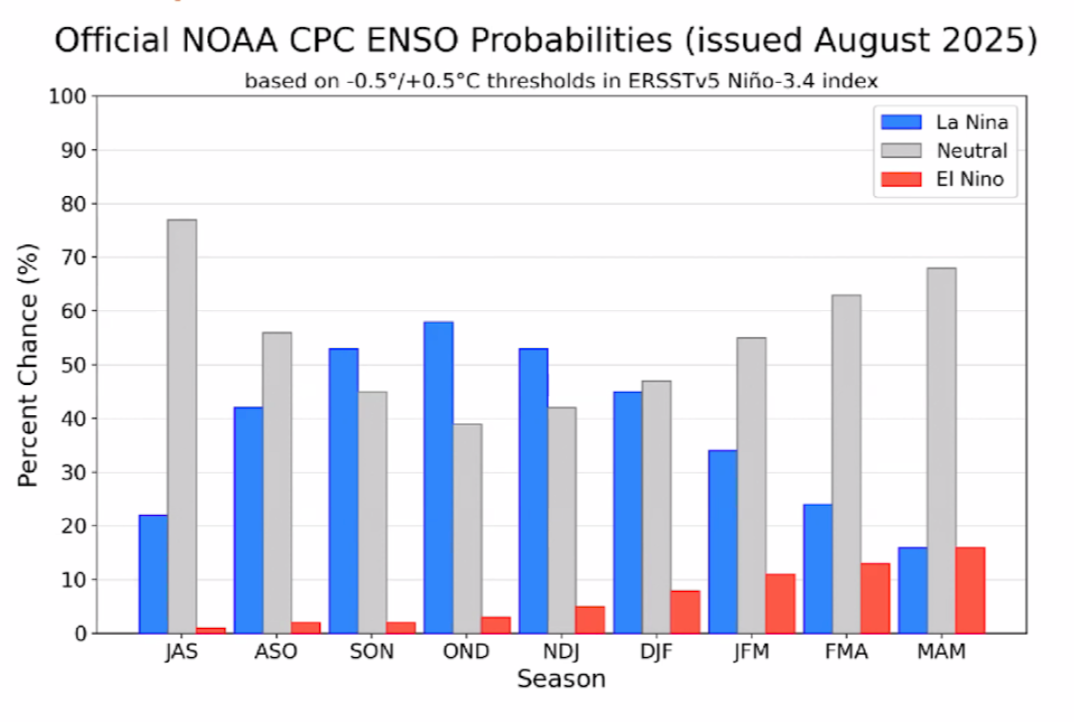
figure 11: ENSO predictions
Want to Learn More? Check out these resources below!
Monitoring
Drought Monitoring: US Drought Monitor
Drought Forecast: National Weather Service Climate Prediction Center
Precipitation Totals: Community Collaborative Ran, Snow, and Hail Network’s Precipitation Mapping System.
Snowpack: Natural Resources Conservation Service
Winter Water Storage System (only applicable until march): Southeastern Colorado Water Conservancy District
Precipitation: https://www.cocorahs.org/
Arkansas River Daily Report – http://www.div2waterops.com/dailyreports
Arkansas Streamflow: http://www.div2waterops.com/ColorsOfWater
Snow Survey and Water Supply Forecasting: Natural Resource Conservation Service Snow Survey
Additional monitoring resources:
Colorado Water Conservation District/Department of Natural Resources
Definitions
30 Year Running Average: When we present the monthly flows, we compare them to that month’s median flows from the last 30 years (referred to as 30 year running average).
Reservoir Percent Full: The Bureau of Reclamation considers a reservoir “full” when pool elevation is at the top of the active conservation pool. Percentage is therefore based on total reservoir volume below that level.
Educational Resources
Administrative Call Explained: DWR
Citizen’s Guide to Colorado Water Law: CFWE Education
Non-Attorney’s Guidebook to Colorado Water Courts: Co State
Voluntary Flow Management
- https://arkvalleyvoice.com/ahra-says-arkansas-river-flows-are-high-and-fast-making-safety-paramount/
- https://coloradotu.org/arkansas-river
U.S. Climate Normals: https://www.ncei.noaa.gov/products/land-based-station/us-climate-normals