
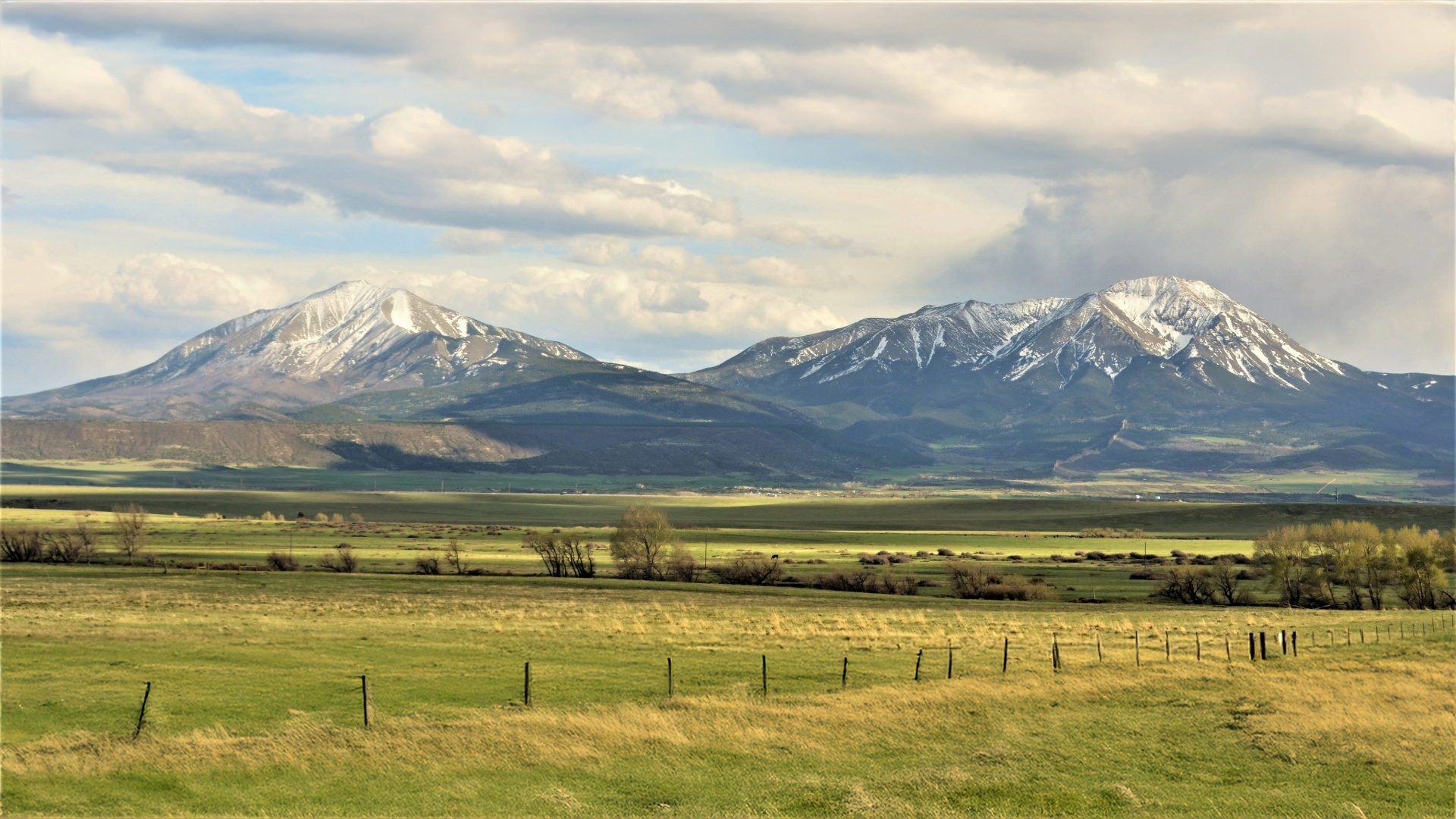
Image of the Spanish Peaks in Huerfano County
Al Tucker, a resident of Huerfano County, has been deeply involved in water work in the Arkansas Basin for decades. A retired data engineer, his move to Colorado sparked an interest in groundwater that grew into research collaborations with the USGS and, in 2009, a seat as the municipal representative on the Arkansas Basin Roundtable. He later had a seat at the table for the inception of Arkansas River Watershed Collaborative (Ark Collaborative), where he now serves on the board.
In this conversation, Al reflects on his long involvement with the Roundtable, the original vision for Ark Collaborative, his passion for groundwater, and what he sees as the future of water management in the Basin.
Cecilia: To start us off, could you introduce yourself—your name, your background, and your connection with the Arkansas River Basin Roundtable?
Al: Sure. My background really isn’t in water. I’m a data engineer.
After I retired, my wife and I moved out here to Huerfano County. We found some land and built our own house out of old Canadian logs. When you live out here, you don’t hook up to city utilities. You drill a well. That got me thinking about groundwater, because if the well runs dry, you don’t have water. Simple as that.
Cecilia: And that curiosity about groundwater is what pulled you into water work?
Al: Exactly. About 25 years ago, I connected with Dr. Ken Watts at the USGS. At first I was looking into coal-bed methane because some houses in the area were getting methane leaks. He and I ended up doing a groundwater survey of the Raton Formation, a coal aquifer that runs from here down into Mexico. We tested wells and springs all across the Basin, especially in Huerfano County.
People don’t realize it, but about 80% of the water in the Arkansas Basin comes from wells. Rivers and creeks look nice, but what people actually consume—whether it’s agriculture or municipal use—is groundwater. And groundwater is vulnerable. Fires, droughts, even farm chemicals and fire retardant—all of that seeps down. After the wet ‘90s, the 2002 drought really shook people awake. That’s why I always bring up groundwater: it’s one of the most important and most overlooked resources we’ve got.
Cecilia: How did that lead you to the Roundtable?
Al: In 2004, the state passed the Water for the 21st Century Act. That created basin roundtables and a grant program. Dr. Watts and I applied for a grant, but we were told Huerfano County couldn’t get one because we weren’t part of the Roundtable.
So in 2009, I went to the county commissioners to ask about joining. They weren’t interested. But the city mayor, who was a friend, appointed me as the municipal statutory representative. I’ve held that position ever since, and that’s how I landed on the Roundtable.
Cecilia: And ARWC grew out of that work, right?
Al: Yes. Around 2015, Carol Ekarius came to the Roundtable with the idea to form a nonprofit. At first, it was called the Arkansas River Coalition. After the Spring Creek Fire, we realized there was a real need for an organization to focus on post-fire recovery, watershed protection, and stream restoration. That’s how the Arkansas River Watershed Collaborative came to be.
Cecilia: What was the initial focus?
Al: Post-fire mitigation. Removing dead trees, stabilizing slopes, erosion control, seeding hillsides. That kind of thing. From there, it grew into watershed protection more broadly.
Watershed protection is critical. Fires themselves aren’t necessarily bad—ground fires are actually beneficial for forest health—but crown fires destroy everything. And after a crown fire, if you don’t act fast, contaminants wash into streams, rivers, lakes, and eventually groundwater. ARWC’s work keeps that from happening.
Now ARWC works on watershed protection broadly: cleaning up after wildfires, mitigating before and after fire, stabilizing streams, and protecting groundwater and rivers from contamination. Without an organization like ARWC, runoff after heavy rains would carry contaminants into streams, rivers, lakes, and groundwater.
Cecilia: You’ve emphasized groundwater a lot. Why do you think it’s so overlooked?
Al: Because you can’t see it. People just turn on the faucet and don’t think about where the water comes from. But groundwater and surface water are connected. It can take years—even decades—for surface water to seep into aquifers, but it happens. And when contaminants are there—heavy metals like arsenic and lead, or farm chemicals—they accumulate.
They may be below danger levels now, but what about for our grandkids, when groundwater may be the only supply left? Look at California’s Central Valley. They’ve been pumping groundwater faster than it recharges. Big rains come, but there’s no storage, so water runs straight to the ocean.
Storage is controversial. Dams are always controversial. I remember when they built Glen Canyon Dam. It created the town of Page, Arizona, and brought jobs, but it also flooded canyons and Native American sites. That’s the trade-off.
Cecilia: What challenges does Huerfano County face when it comes to water?
Al: Water follows the dollars. Huerfano and the Arkansas Basin are some of the poorest areas in the state, while agriculture — concentrated along the Arkansas River — is one of Colorado’s biggest industries. Small towns here have little say compared to the cities.
People have always wanted to prevent water from leaving Huerfano County. But the truth is, unless we educate people about the importance of water — starting with children — we’ll keep facing these struggles.
Cecilia: What is the attitude towards groundwater here in the Arkansas Basin?
Al: Groundwater still gets overlooked unless you’re a farmer. And water follows the money. Agriculture is huge in Colorado, but this Basin has a lot of small, poor towns. Bigger cities often have more influence, and that creates an imbalance.
Cecilia: What can we do to address this gap in knowledge?
Al: Education. I grew up just turning on the tap. I didn’t know or care where the water came from. We need to teach kids early on how vital water is. Without it, civilizations collapse.
I studied anthropology as an undergrad—focused on Native American history in California. And one thing you see again and again in history is how resource abundance or scarcity shaped societies. That’s still true today.
Ultimately, I know a little about a lot of things. Why?I just like learning. That’s really why I got into water. Once I started drilling my own well and realized how little I knew, I wanted to learn everything I could.