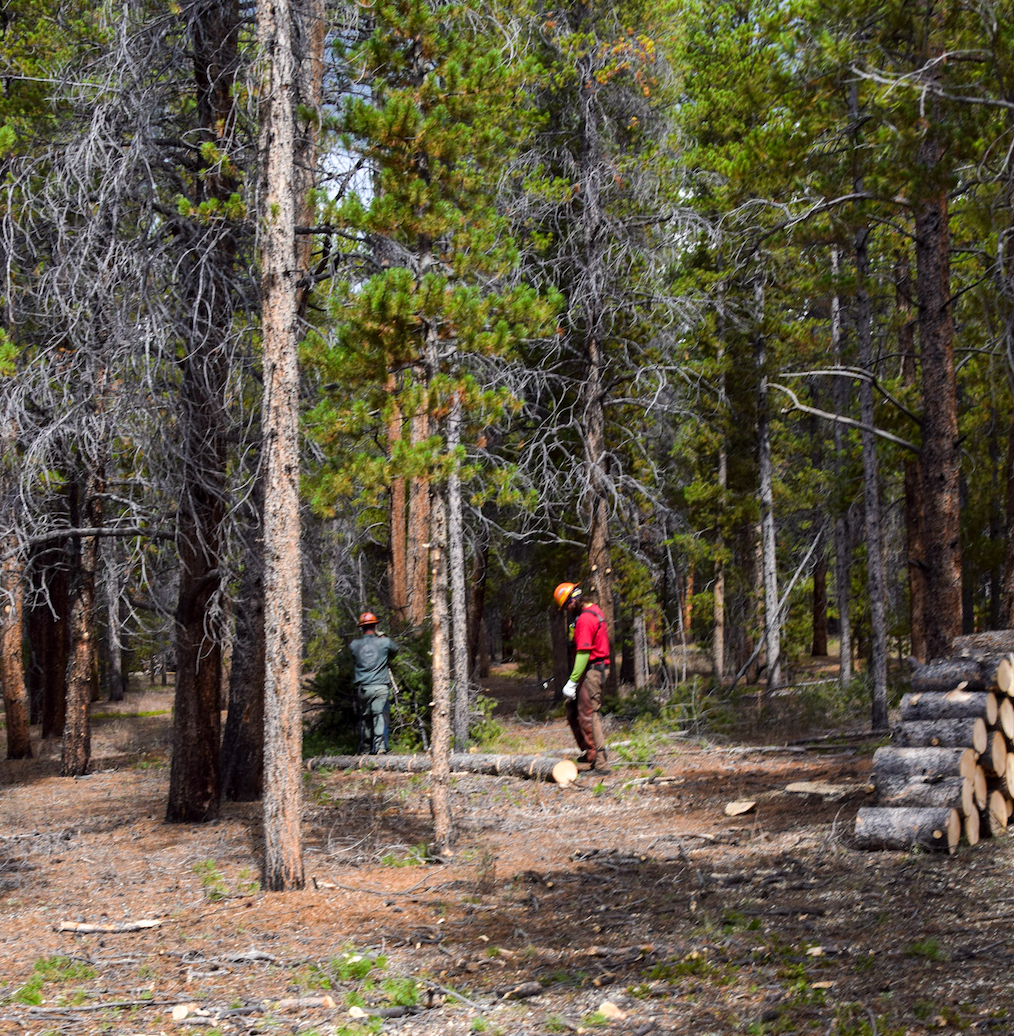

September 9, 2025- Staff from the Colorado Department of Natural Resources visited Leadville to tour one of the Arkansas River Watershed Collaborative’s (ARWC) fire mitigation projects in Lake County. The project is the cumulation of several years of effort by the Department of Corrections’ State Wildland Inmate Fire Team (SWIFT) crews, and is part of a larger effort supported by the Colorado Strategic Wildfire Action Program (COSWAP) Workforce Development Grant. COSWAP is a permanent state program created to address the urgent need for wildfire mitigation on the ground while expanding training opportunities for the state’s wildfire workforce.
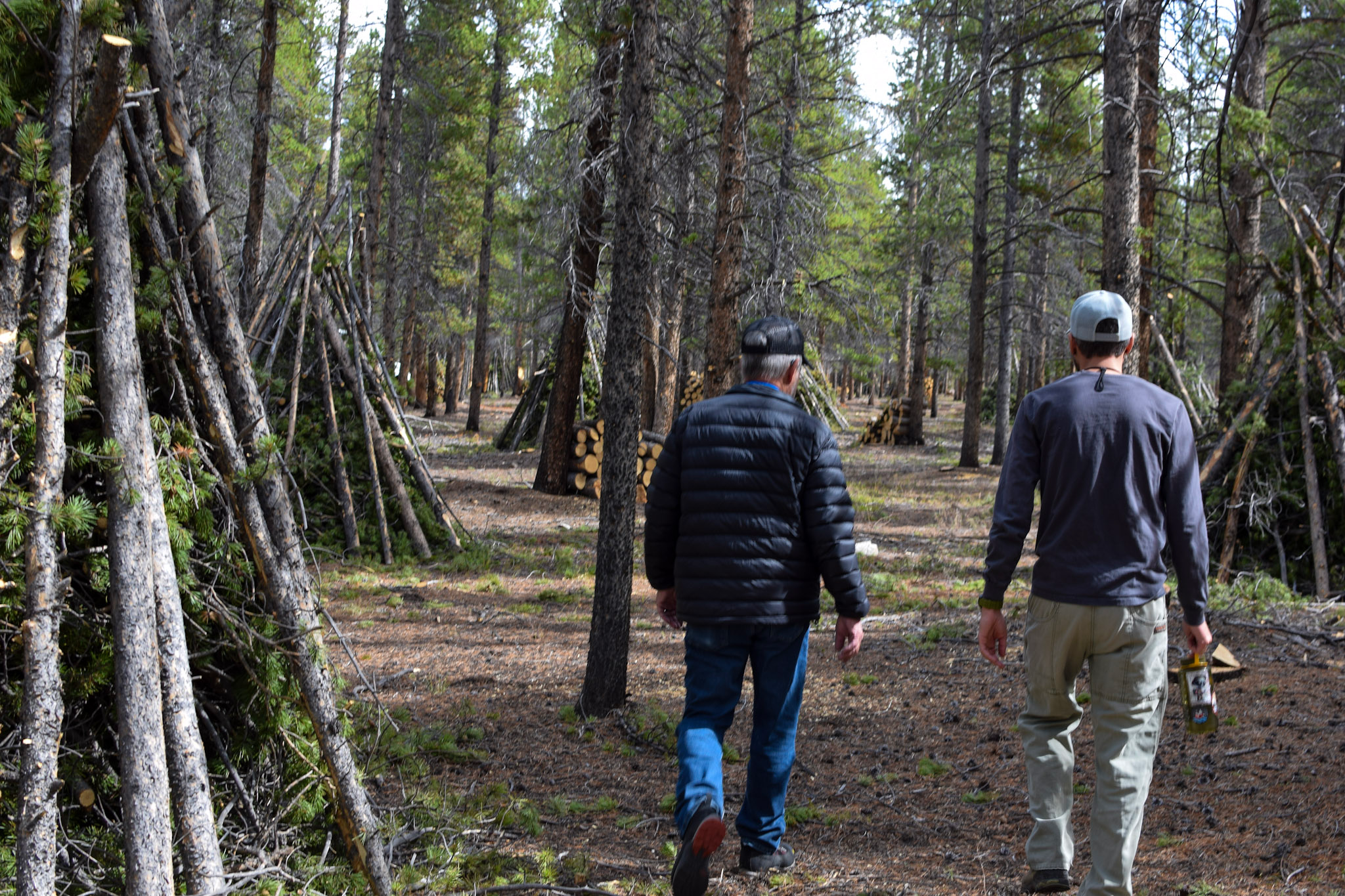
In Lake County, the results of this work are visible on the landscape. At the community field and the Colorado Mountain College Leadville campus, more than 600 slash piles have been created through thinning and fuel reduction projects. These piles are the first step in a larger fire mitigation plan: once conditions are safe, Leadville/Lake County Fire-Rescue (LLCFR) will ignite them to dispose of the woody debris, and therefore reduce wildfire risk.
Last fall, Leadville/Lake County Fire-Rescue burned 50 of these piles, marking the first-ever pile burning operation in the county.
This year’s 2025 burn plan has been developed in partnership with Lake County and the Colorado Mountain College Leadville campus to address the piles on their property. The plan includes a smoke dispersion strategy and has been approved by the Department of Fire Prevention and Control. Southwest Conservation Corps and Firecamp will also be assisting with the pile burning.
The benefits go beyond mitigation. According to SWIFT crew lead Ahmad Ford, roughly 90% of the crew members he has worked with intend to pursue a career in fire following their time with SWIFT. By linking wildfire mitigation with workforce development, COSWAP creates opportunities that strengthen both Colorado’s communities and its fire response capacity. Additionally, the crews have been cutting and piling free, usable firewood for the community.
As Leadville/Lake County Fire Rescue Operations Chief Dave McCann reflected: “I can’t think of anything that could make the City of Leadville safer.”