Interlaken Fire: 5 Months After Flame
Four months after an abandoned campfire ring ignited the hillside above Twin Lake Reservoir, I took a chilly pre-sunrise run along the edge of the burn scar in awe. It was so alive. It was mid-September, but the purple flowers of fireweed were pushing up through ashy soil like it was spring.
I had studied the theory of post-fire succession in the classroom. I remember passing a lodgepole pine cone from high schooler to high schooler as the guest forester at the front explained to us that the cone would only open its scales and drop its seeds after a wildfire. I passed the dried cone between my own hands as he spoke, thinking that the forester reminded me of all of the God-pedaling family members at my grandfather’s funeral: dodging the true weight of tragedy.
Now, I reflected on my own cynicism as I call to my puppy, who was dashing in and out of the charred forest. He was hypothetically an all-white husky, but the ashy ground made him look more like a burnt marshmallow by the minute. The sun rose. I had about another hour before I would meet my fellow ARWC staff members, various other partners, and a chainsaw crew in a nearby parking lot to begin our first Interlaken Fire post-fire workday.
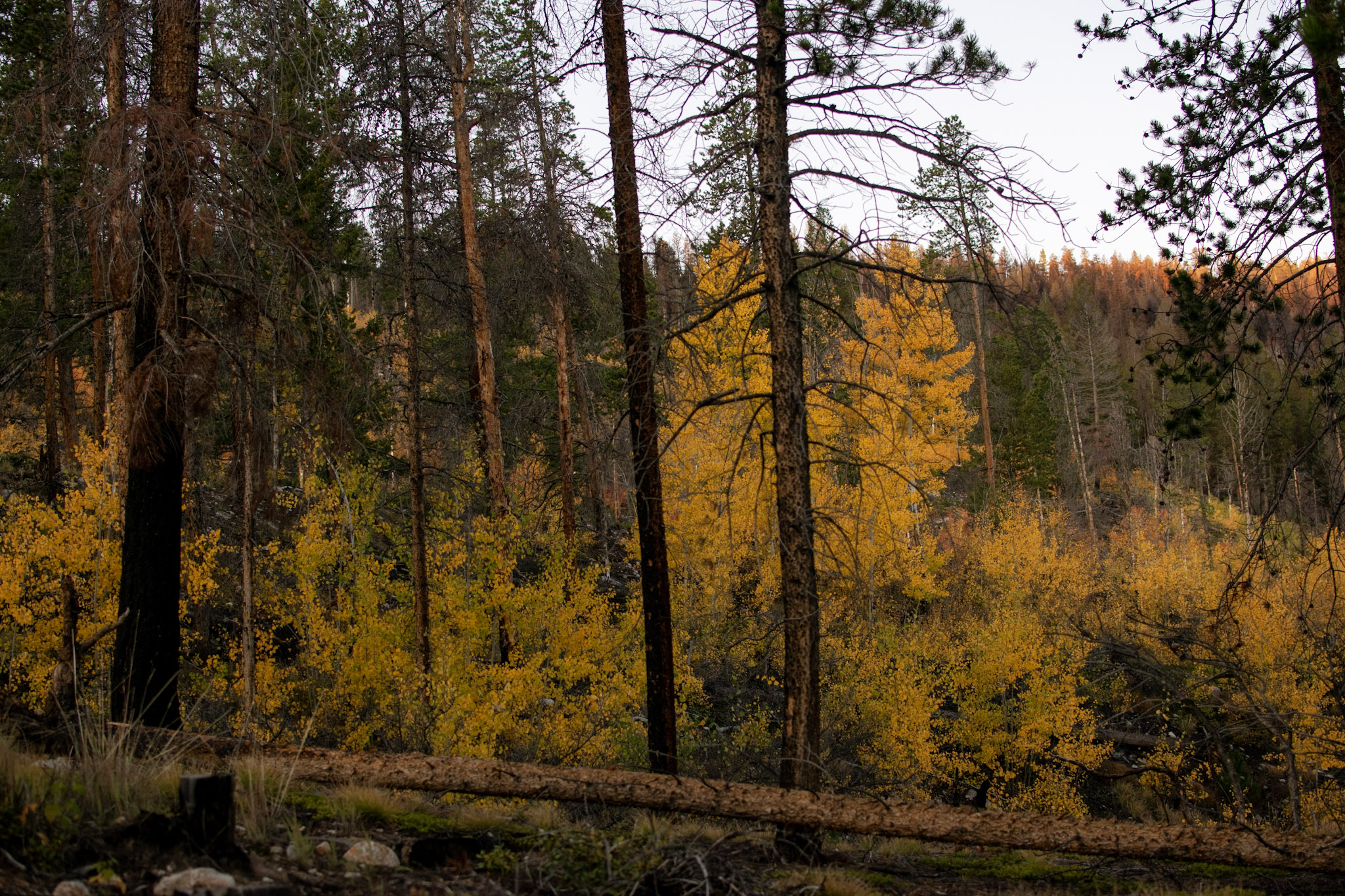
Interlaken Fire Scar (9/26/2024)
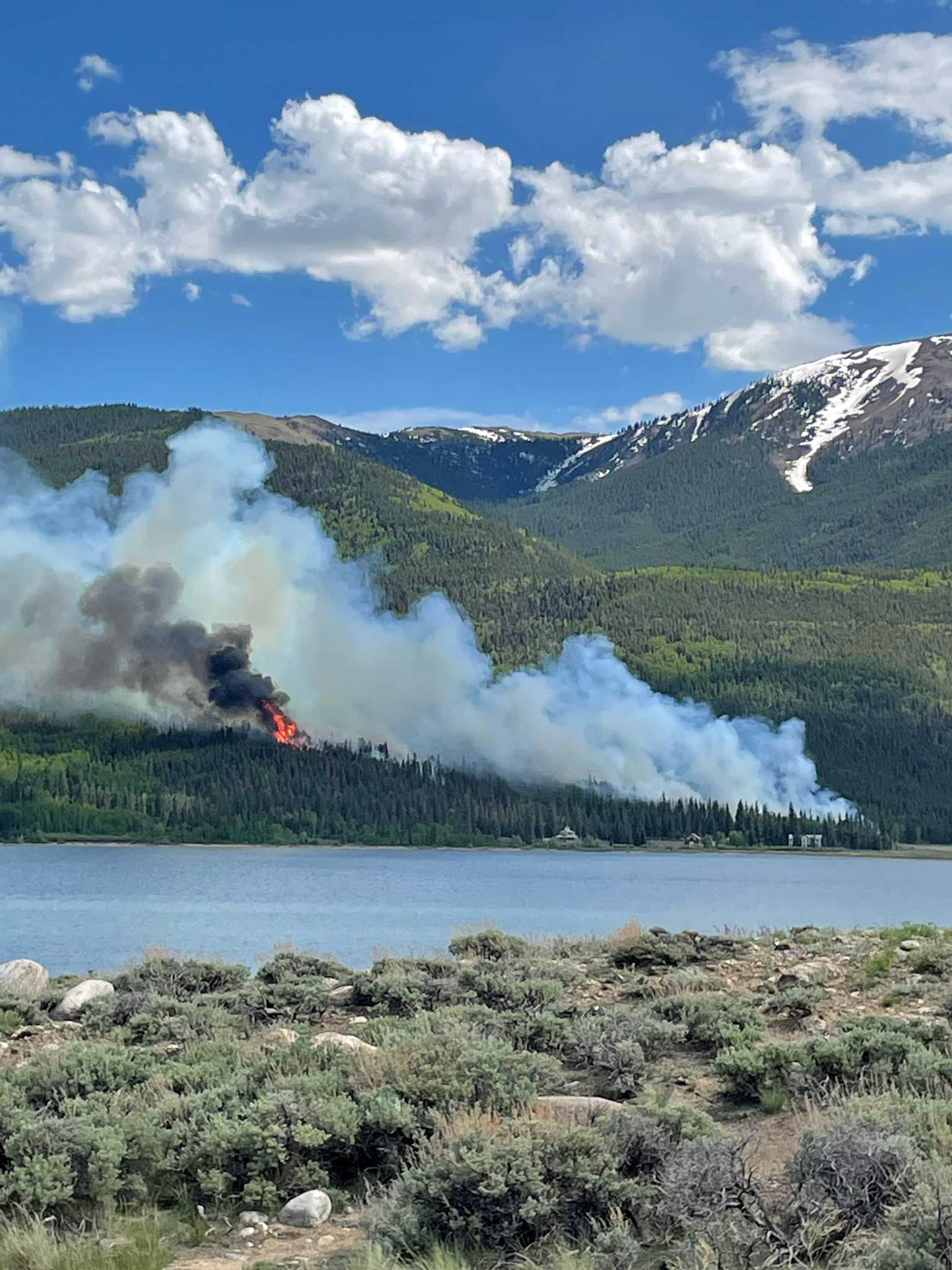
On June 11th 2024, the Interlaken Fire in Twin Lakes, CO was reported. In the two weeks that followed, over 700 acres of U.S. Forest Service land burned above Twin Lakes Reservoir. More than 200 fire personnel, helicopters and air tankers were at Interlaken daily to fight the blaze. Community meetings were held and a facebook group was created to keep the public informed on the status of the fire. Daily updates included fire containment, local closures, and details on suppression efforts.
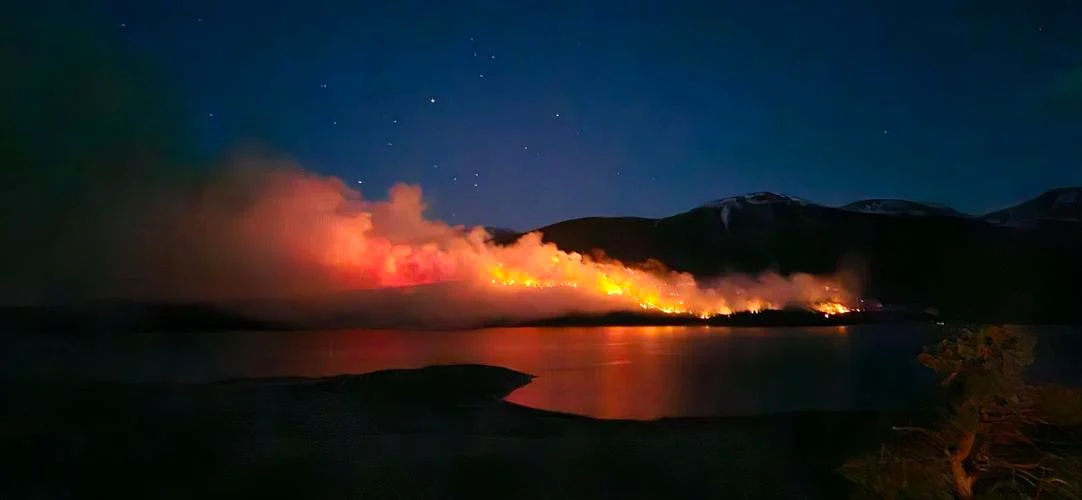
Interlaken Fire burning, photo by Cody Ray, published in Herald Democrat (6/11/2024)
On June 25th, the whole cofire was reported 100% contained, and, incredibly, none of the historic structures in the area had burned. Firefighters began the “Suppression and Repair” efforts, which aimed to limit the damage that fire suppression actions may have caused the landscape.
Pikes Peak San Isabel National Forest Service then assembled an Burned Area Emergency Response (BAER) Team to assess potential impacts on trails, roads, campgrounds, culverts, and heritage values. BAER Teams are typically the first step in post-fire recovery work, but the effort can continue for several years following a fire to support soil stabilization and vegetation recovery. Which is why I was here today.
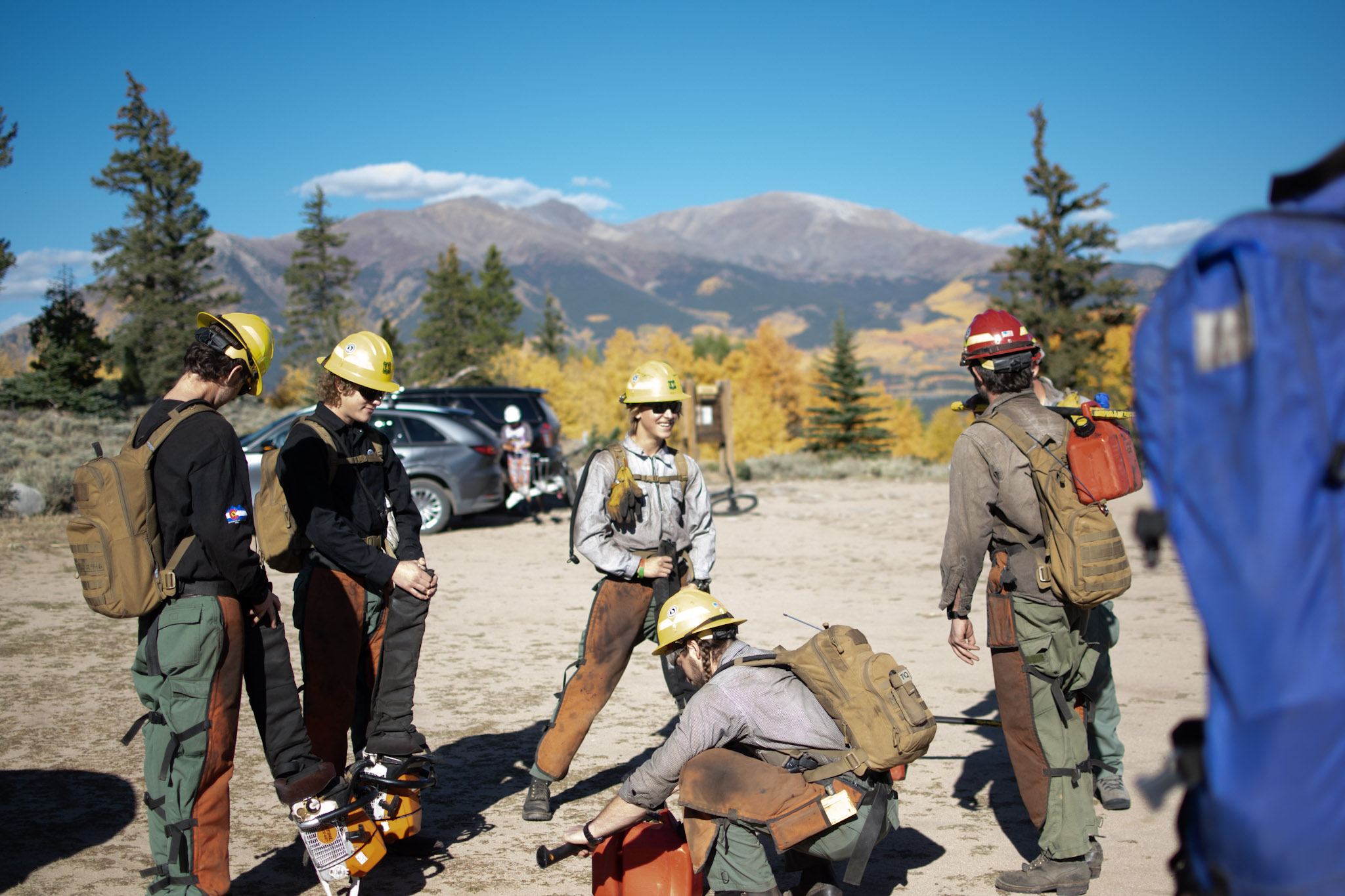
Partners assembing for a post-fire work day (9/26/2024)
After a quick (and freezing) dip in Twin Lakes, I joined the group of hard-hat wearing post-fire partners and co-workers to eat tailgate doughnuts and make a game plan. Our primary objective was to protect the watershed from post-fire flooding. Twin Lakes, which sits directly beneath the fire scar, holds water that is not only brought down the basin for, but is piped over the mountains to front range municipalities, including Colorado Springs.
Brad, the contractor we had hired to devise the watershed protection plan, interrupted our doughnut eating to lay out the plan. During a landscape assessment trip earlier in September, we had identified a handful of drainages along the hillside where rain events had moved debris from the above burn scar down towards Twin Lakes. Water quality gauges in the lake had already indicated increased carbon levels in the reservoir. Today, we would use natural material already present in the drainages (downed trees, rocks) to fortify the drainage against severe runoff. This meant building semi-permeable barriers that would strain burn scar material from the flowing water before it reached Twin Lakes.
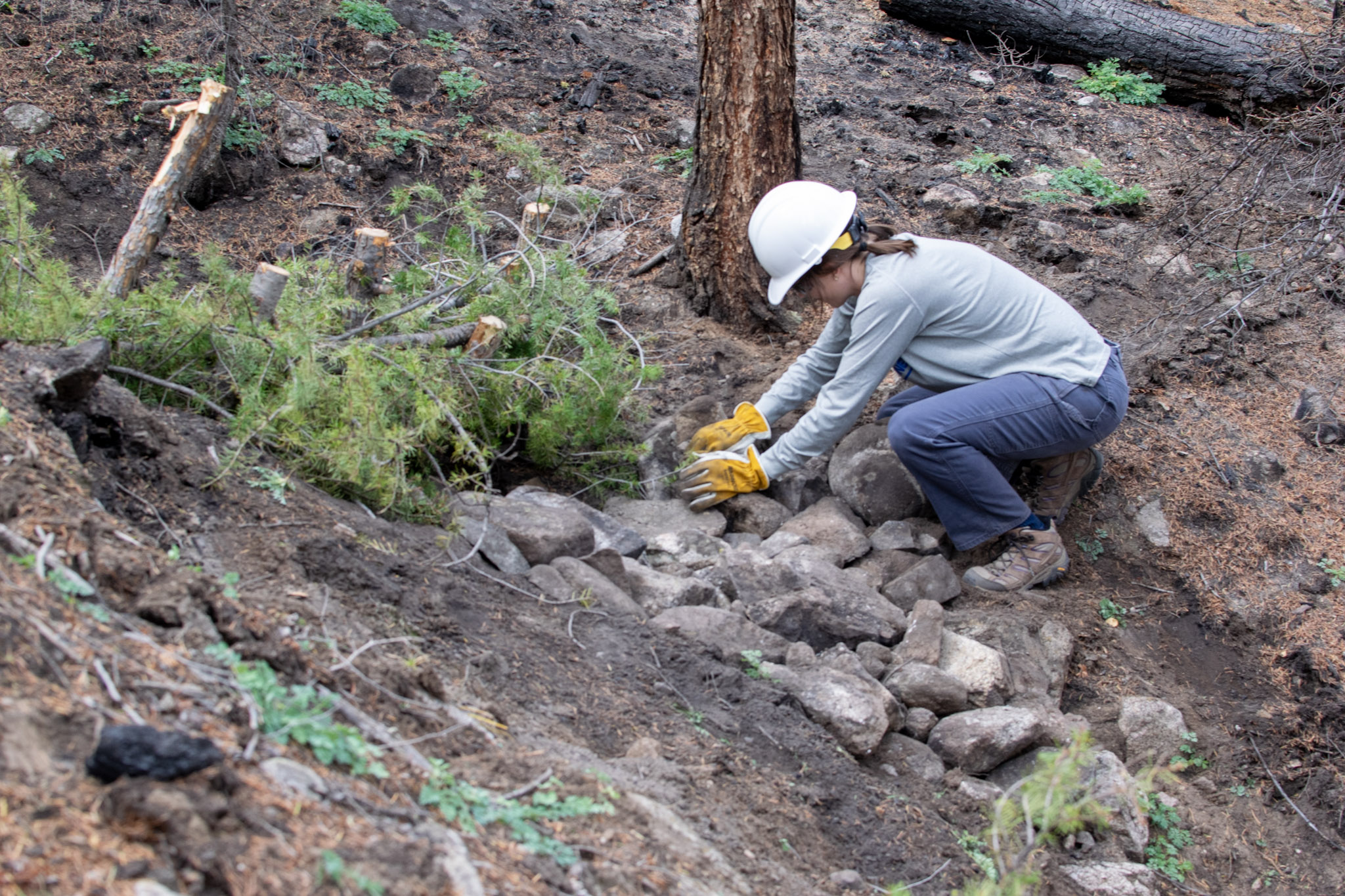
A volunteer building a semi-permeable barrier in a drainage (10/11/2024)
I don’t know why I expected that day to be a somber event. Maybe I couldn’t conceive of any engagement with so much death: dead trees and underbrush, to be anything but an unofficial funeral. As laughter and chatter bounced between us on trail, though, I realized that a handful of the people out there were fighting the fire when it was burning. To see it as it was now, with early morning bikers and aspen leaves (still alive) turning yellow, was enchanting, not haunting.
I felt jealous of them. They could take credit for the effective and efficient containment of the fire when it was burning in June. Meanwhile, I had tracked the updates on my phone as the smoke moved down the valley towards my new home an hour south. I had just moved to Salida, CO that spring to take the Watershed Resources Intern position at Arkansas River Watershed Collaborative (ARWC). When the Interlaken Fire ignited, I knew just enough about wildfire ecology and mitigation to ask the right questions. The learning curve was steep, the flood of information overwhelming.
On a particularly smokey afternoon, when the fire was still barely contained, my coworker, Sam, informed me that ARWC had just applied for a Wildfire Ready Watershed grant. This fact just about broke me. I had taken on responsibility for stewarding this basin, and within a month it had literally gone up in flames. I was searching for a place to harbor the blame for my clogged lungs and the hazy mountain skyline, and with the knowledge that we (ARWC) had identified this area as one of high priority, I shifted the guilt onto my own shoulders. I didn’t, then, understand the difference between guilt and responsibility.
When we arrived at the first drainage, we all dropped our tools and assessed the area. Upslope of the trail, a steep perennial stream (now dry) had carved a path from the burn scar above through unburned forest, bringing with it large branches and ash. The ash-stained soil ran across the trail, under a large log, and then dropping steeply into the reservoir below. It was easy to imagine all of the now-still material mobilizing and tumbling downhill with a heavy rainfall. It was a beautiful bluebird fall day, though, and everything was still.
And so chainsaws were choked and hard-hats dawned as we began working away. A crew to haul downed trees, a crew to limb them, a crew to size and sharpen them into stakes that could be driven into the ground and woven with slash as a makeshift barricade. Rocks were moved into the drainage to stabilize the loose soil. I shifted between collecting rocks and shooting photos. I was realizing quickly that this chapter of the wildfire story was one that I had never before read. The laughter, lunch break naps, and charcoal-stained cheeks of post-fire work did not make it into the news cycle. It would be hard to write, too. Hence the photos.
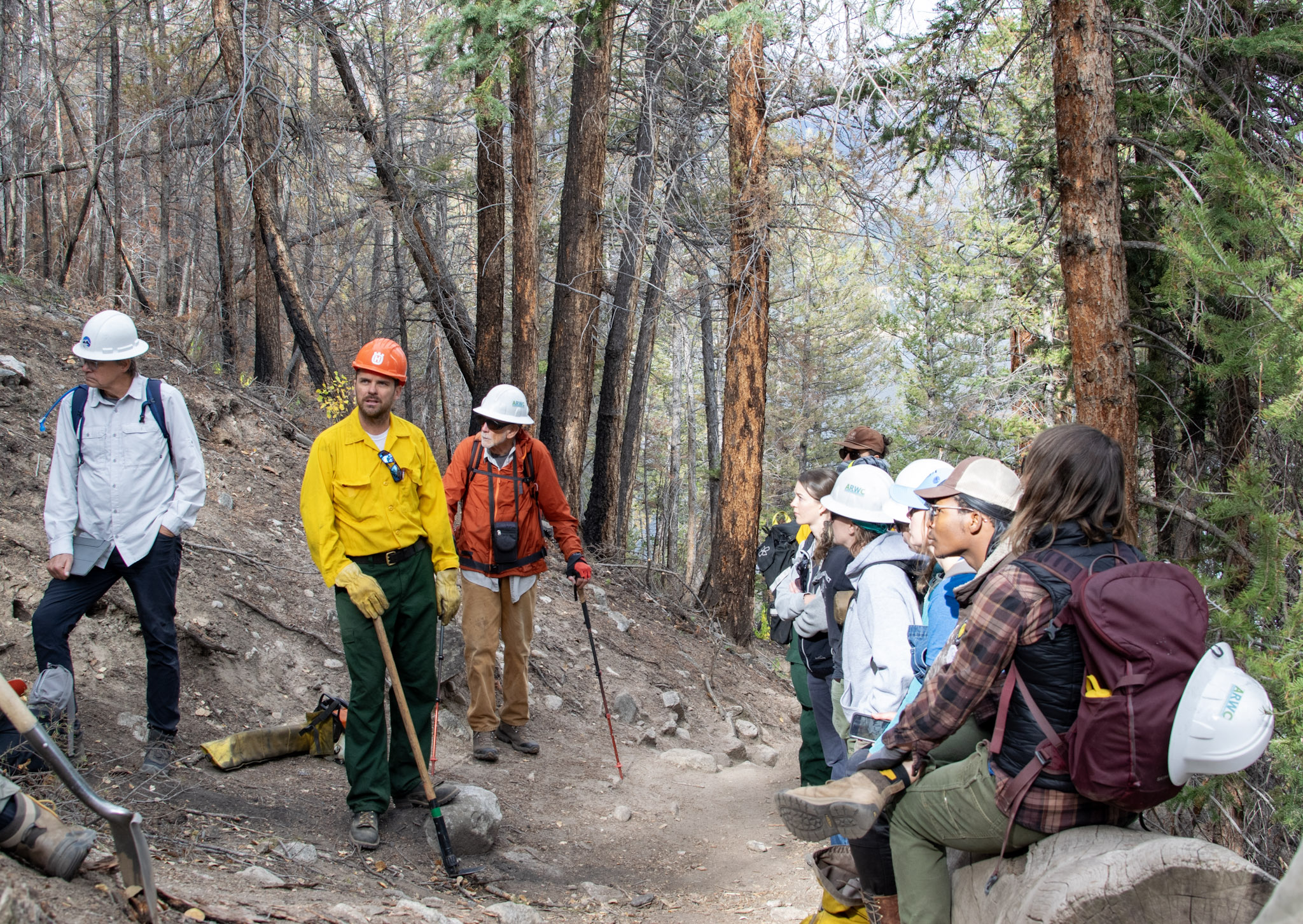
PJ Klavon, U.S. Forest Service, giving work day instructions (10/11/2024)
What is the difference between guilt and responsibility?
I was raised on The Lorax by Dr. Seuss. In the children’s picture book, a healthy environment could be calculated by a kindergartener: more trees = good, fewer trees = bad. Although my four years of working towards an environmental studies degree challenged this notion, the image of The Lorax standing on the stump of a last truffula tree, obscured by clouds of smog, always haunted me. But this simple calculation (more trees = good, fewer trees = bad) also dictated the popular forestry management technique of complete fire suppression for a century in the United States. The catastrophic wildfires that we see across the Western US are the result of extreme fire suppression.
Forests burn. Their ecological patterns are dependent upon it. When humans suppressed this natural process, excess understory growth, natural debris, and crowded overstories created the perfect environment for a small wildfire to grow and rage across landscapes. These are the fires we often see in the news that take down whole houses with a single spark. As a human, I feel guilty for creating this perfect storm that, combined with rising temperatures and drought, has turned much of the Western United States into a tinderbox waiting for a spark.
But watching the efforts that we are taking to protect the drinking water, historic structures, and trails following the Interlaken Fire, I realize that here in the basin, the forests and water and people are so incredibly interdependent. We as humans designed it that way, and with that, we took on the responsibility of managing it. Our work at ARWC, I have learned, is to facilitate that management.
Between when the fire was contained and when we started the post-fire work, we received word from the Colorado Water Conservation Board that our Wildfire Ready Watershed grant had been approved. I was surprised to hear this. Wasn’t it already too late? But no, the forest had just taken the first step of readying the watershed for us. Forests prepare to burn by burning. Wildfire Ready Watershed planning occurs under the assumption that “it will burn. It IS SUPPOSED TO burn, but let’s ensure that it does so in a way that is healthy for the forest, water, and people.”
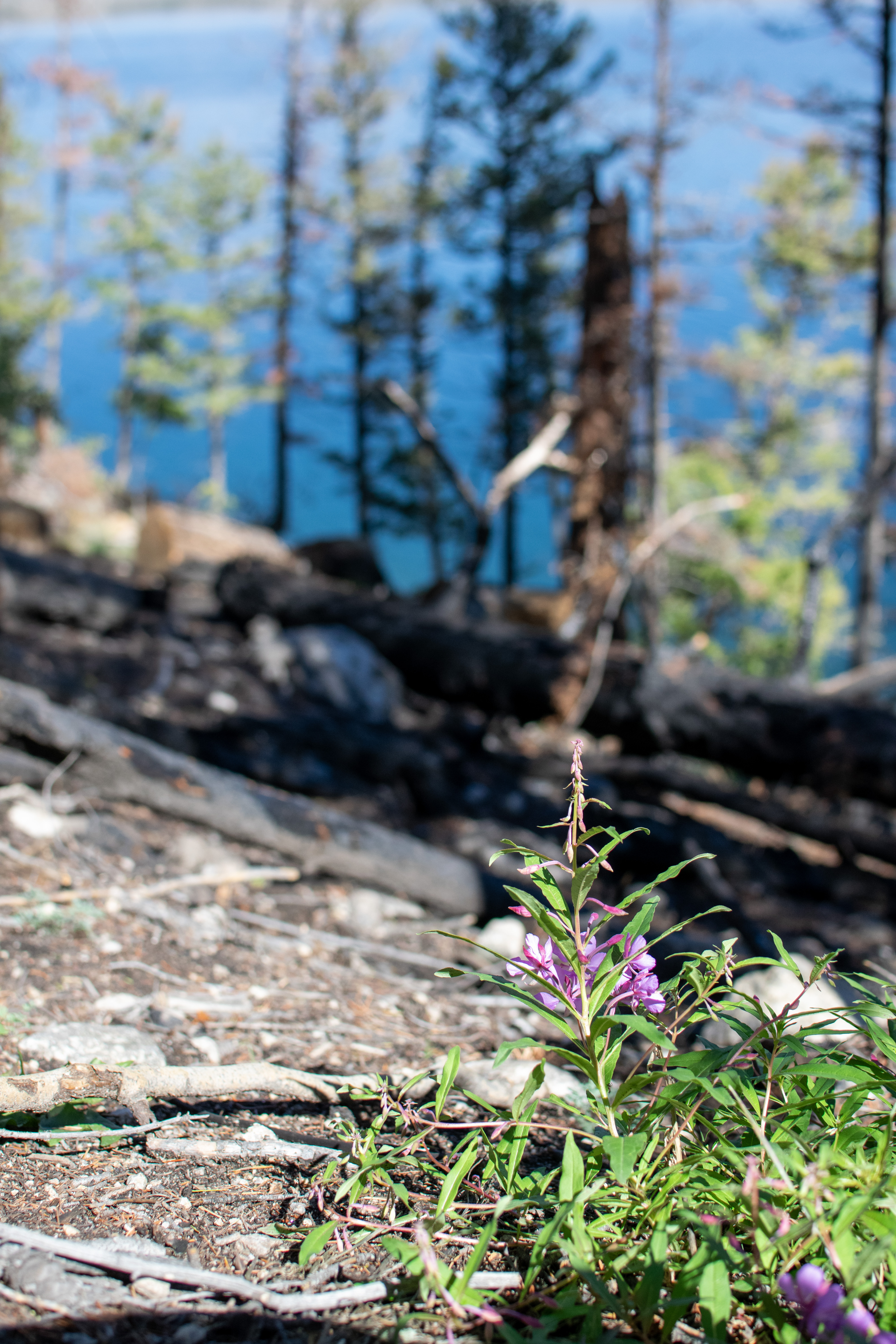
Fireweed, a post-fire “pioneer species”, in the Interlaken Fire scar (9/12/2024)